

A while back I read The Golden Notebook by Doris Lessing, a novel famous for its fractured structure and the debate it caused when it was published. This is not a book review, but the book has been sitting in my head for months because it made me realise something uncomfortable: women spend much of their lives dividing themselves into roles. Doris Lessing herself felt that the book was misunderstood by almost everyone.
“… my major aim was to shape a book which would make its own comment, a wordless statement: to talk through the way it was shaped. As I have said, this was not noticed.”
“the essence of the book, the organisation of it, everything in it, says implicitly and explicitly, that we must not divide things off, must not compartmentalise.”
To her, the format of the book, the four distinct sections of the notebooks, was crucial. It showed that the idea of separation was impossible.
The Roles Women Learn to Play
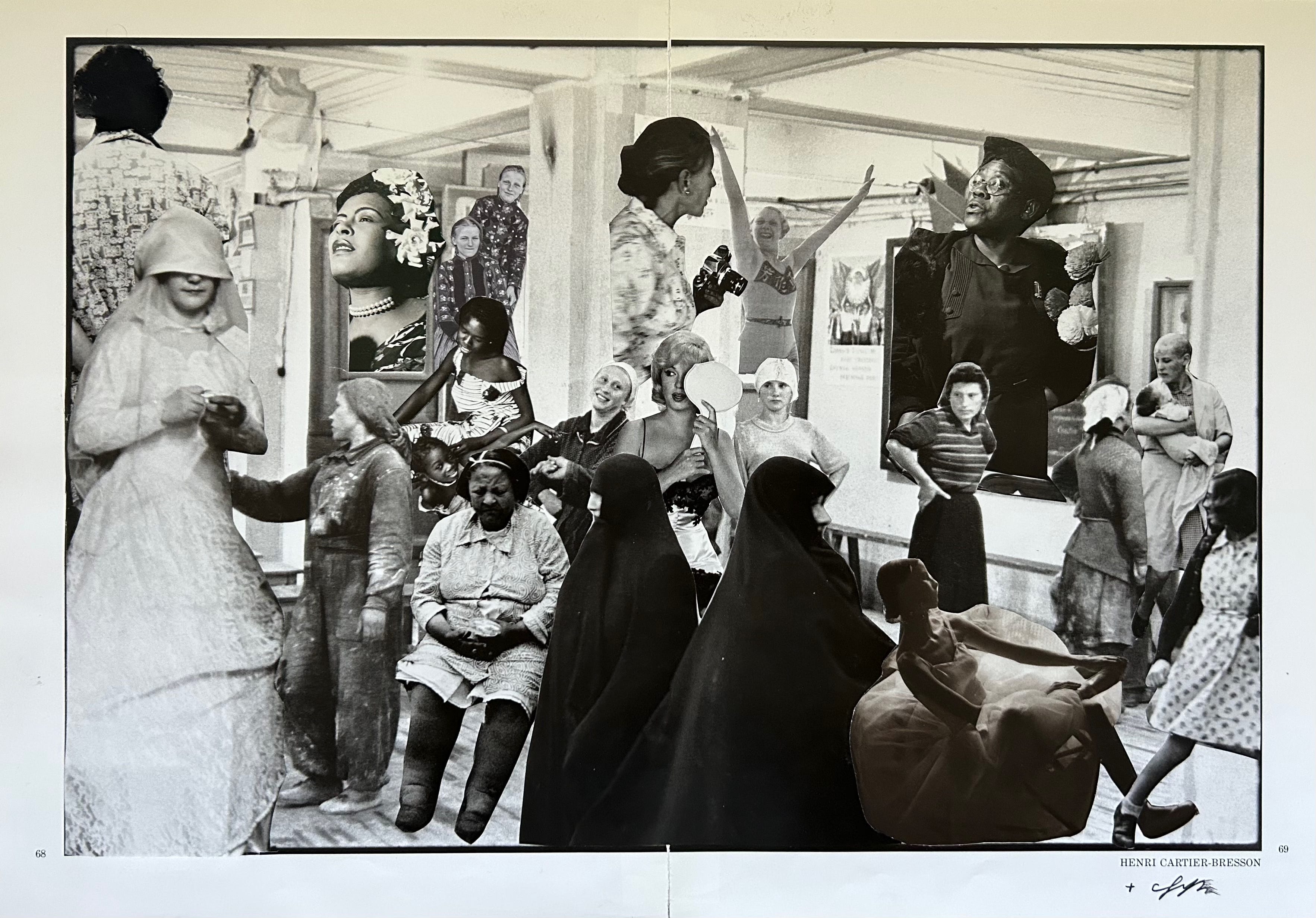
What spoke to me in The Golden Notebook was Lessing’s astute observation of the experience of being a woman: The different roles she plays, in different situations, with different people. But most importantly, the fact that women are always playing a role in order to not scare or upset those around her, be it husband, boyfriend, colleague, superior, or even their child. The only relationship that exists on equal footing, with honesty and truth, is the one she has with her best (female) friend. In that relationship there are no roles to perform. Things sometimes remain unsaid, but they are implicitly understood and accepted. In all other relationships a woman is moderating or adjusting herself to keep the peace, and to please.
Entering the In-Between
Over the course of this past year or two I have come to find myself in a state of transition: moving away from a role that once gave me purpose, toward another role that I cannot define. I am not yet there, so instead I exist in the in-between, in the limbo, in the chaos. It is something experienced by all women, but despite being universal it is intensely personal, and somehow shameful. It’s quickly labeled cliché, and we promise ourselves to not be the sad trope.
If you didn’t catch on yet, I am talking about perimenopause, which ultimately lands you in Menopause (read with suitable doomsday-music playing in your mind). The After-Life. Women reporting back to us from the Other Side often claim they are quite happy there. It’s described not as a decline, but as a rebirth, a new beginning into an empowered phase of life. That doesn’t change the fact that those of us still on This Side dread it like the plague.
If you are a woman somewhere in the middle of life, you may recognise this strange moment: the roles that once defined you begin to loosen. Children grow older, your body changes, and things that once validated you (attention, productivity, being needed) quietly start to disappear. And suddenly you are left asking a question you never had to ask before: who am I when these roles fall away?
A Life Built Through Relationships
Life is relationships. Most of us believe we are a fixed, coherent person, but who we are shifts depending on who we are with, and each new relationship reveals a slightly different version of ourselves. When you meet someone new, you also meet a version of yourself you didn’t know existed, or maybe had forgotten about. This is the magic of falling in love: you fall in love with yourself as much as with the other person. But in this magic moment of connecting with someone, I often find myself in fear of bursting the bubble, of ruining the rosy image they have of me. My words or actions might shatter the illusion of who they think I am. I control my breath so as to not take up too much space, and my chest tightens so my feelings won’t spill over. Because if the intensity of my emotions scares them away, the person I could have been evaporates with them.
Living the life of an expat adds another layer of distance to your relationships. You move in and out of people’s lives and your close friends become scattered across continents. When you never stay in one place permanently, being an outsider becomes part of your identity as you decide where to assimilate and where to remain apart. I have spent the past twenty-four years living this life. I left my native Sweden alone but met my husband soon after, and together we have moved across borders eight times. I’ve borne children in three different countries. Each move means new languages, new relationships and communities, and constant reassessment of the ones left behind. Should I keep up my French? Is this a phone call, text message, or IG story friendship? Will I find a hairdresser that won’t butcher my hair? The only constant is our family: Home is where we are, not where we happen to live.
I Mother, Therefore I Am
Back to my state of chaos. I’m approaching a Certain Age, that age when construction workers stop catcalling you, that age when people follow up a compliment with the dreaded addendum “for your age”. At the same time my role as a mother has begun to shift because my children are getting older. For the past eighteen years I have had a very clear identity: Nurturer of Life. These small humans depended on me for almost everything and in return they gave me purpose. I am Mother. This, of course, is a life-long role because children never stop needing you and you can’t clock out and just not be a mother for a weekend, but the shape of the role changes and some parts fade.
Before becoming a mother I was a young woman who found validation through friendships, work (first school, then professionally), and the appreciative looks and comments of men (I was young in the pre-#MeToo era, so many of those comments were wildly inappropriate). When my children were small my validation came mostly through them. Directly, through the love they gave back, and indirectly, through how they were perceived by others. Anything from compliments to how lovely they are, to leaving the dentist without cavities, validate you as a Mother, far more than praise for your professional work could ever validate you in your career. Because being judged a Good Mother is not just a grading of your parenting, it is a judgement of you as a person. I am a good mother, therefore I must be a good person. There is no separation, you cannot divide the role from the self. I Mother, therefore I Am.
When That Identity Starts to Shift
Then perimenopause came knocking. My children are older, my hormones are shifting, and suddenly I no longer feel driven by the urge to keep the peace and nurture at all costs. For many women this phase coincide with raising teenagers, and if there is one lesson teenagers teach quickly, it is that you must to separate yourself from them. You can force small children to eat their vegetables, brush their teeth, go to bed at a reasonable hour, and limit screen time. You cannot force a teenager to do ANYTHING. All you can do is hope that what you did earlier had some positive impact, and pray they emerge on the other side as reasonably happy adults who still speak to you. You realise pretty fast that you are not, and cannot be, the sum of your achievements as a mother. But motherhood can become so all-encompassing that it quietly replaces every other source of identity and validation, until your worth feels measured solely by how well you nurture, give, and endure. So where does validation come from when this foundation starts to shift? The obvious answer is from within, but how the hell does that work when, for 20-plus years, your validation came from external sources only?
Reading a book is a highly personal experience. You notice themes that resonate with your life at that particular moment, which is why it can be both rewarding and disturbing to re-read a favourite book five or ten years later. Because Life Happens, and experience reshapes your view of the world. I am no longer young but not yet very old, my children still live at home but they no longer need my constant presence, life happened, and I am no longer the same person I was before. Recently my youngest daughter told me she believed every “old person” secretly wanted to be young again. I beg to differ. I would not want to go back to be my younger self again, to trade in all the iterations I have lived through to arrive here.
Cracking Open
I think I was always innately guarded, private perhaps, but lately I often feel as if living under a glass dome, separated from my surroundings by an invisible shield. I am in here, while life happens out there. Over the past year I often experienced a strange kind of dissociation. I’d look down at myself, in places where I used to feel perfectly comfortable (school pickup, on holiday, grocery shopping, walking down city streets) then suddenly think: “This is all bullshit, none of this matters!” It’s deeply unsettling, mostly because I no longer know what does matter. I feel simultaneously indispensable and irrelevant. Indispensable in the small world that is my family, and irrelevant to the world at large.
My family used to feel like the castle that sheltered me, but now it feels more like the fortress that imprisoned me and rendered me invisible. Then last year something unexpected happened. Someone suddenly, surprisingly, shockingly, saw me. Not as a mother and not as part of a family unit. Someone found me interesting and asked me if I felt alive? It was as if my entire being had been encased in granite that suddenly began to crack. I shattered like a smashed mirror, and now here I am. I am Chaos.
Validation from someone else is NOT the magic key to fulfilment, that is not the point I’m trying to make. That moment was a catalyst, not the cause or the climax. In the introduction to a later edition of The Golden Notebook, Lessing writes
“This theme of ‘breakdown’, that sometimes when people ‘crack up’ it is a way of self-healing, of the inner self’s dismissing false dichotomies and divisions”.
As a mother you so easily lose yourself in the relationships to your spouse and your children. You are defined by your role as a nurturer, and when this role changes you are left with a diminished sense of self. If I am no longer needed to keep another human alive, what is my value?
Everyone Says: Sit in the Chaos
Let me clarify one thing: I will NOT be wrapping myself in cellophane à la Kathy Bates in Fried Green Tomatoes, nor do I intend to reenact Eat Pray Love by abandoning my family to “find myself” in Asia. However, I am not one who sits comfortably in confusion for very long. I like to identify problems and then solve them, quickly. Consequently, I journaled, I spoke to my closest friends, I discussed it with my therapist, I had a tarot reading, and on the recommendation of a close friend, I consulted a medium. I even went to a yoga retreat in Mallorca! Infuriatingly, every path led to the same conclusion: Let go of that which no longer serves you, stop seeking external validation, and Sit In The Chaos. My path will reveal itself in due course and I cannot rush it or force progress.
What the actual fuck!? This is not the neat solution I had hoped for! I actually don’t know what answer I was looking for, but something to do with Divine Destiny, probably. I am used to providing complex logistical solutions and multilevel emotional support to several people on a daily basis. I am good at solving other people’s problems. And I am tired of this shit! I would like a Path Forward to arrive at my doorstep, wrapped up nicely in tissue paper, and crowned with a sparkly bow.
Can someone else - FOR FUCKING ONCE! - just solve this without me having to do the fucking work! But apparently, that’s not how this shit works.
Clothes as the One Constant
As I now sit in this chaos and meditate on my future relevance, I need to anchor myself to something that has always been true. Not cling to a former version of myself, but connect to a tangible, tactile, constant part of me. For me that constant is clothes. As superficial as it may sound, I have always loved them. Not fashion exactly, just clothes and what they can express and make me feel. My mother says I started choosing my outfits at the age of three, and after that she lost all influence. In my early teens I spent hours in second-hand stores, and then altered my finds to fit my size and purpose. My main goal was to look like no one else, or possibly like a hippie, both of which was difficult to achieve in the aggressively conformist 90s Sweden.
Taste and style changes as you move through different stages of life. When I met my husband I was 23, and like me, the millennium was still very young. I wore tank tops and very low cut pants; on weekends it was bright green eye shadow and asymmetrical tops. I was new to Germany and the average Frankfurter considered a clean T-shirt adequate evening wear, meaning I was perpetually overdressed. And I didn’t drink beer. Out of place doesn’t quite cover it.
When my children were small any sense of style I had collapsed entirely. At first, my main objective was to be clothed while constantly breastfeeding, and that phase alone makes any coherent aesthetic nearly impossible. Most women just aim for ‘not milk-stained’ and still fail. Then came a time when I dressed for playgrounds and food stains, to sit comfortably on floors and in sandboxes, to try to the hide extra weight that seemed impossible to shed, and to not get hurt (anyone who’s worn interesting earrings within reach of toddlers knows what I’m talking about). My clothes were all over the place and nothing looked quite right. Or felt quite right. But then, neither did I. The only thing that really mattered was the wellbeing of my children, and what I wore was mostly irrelevant, as long as it wasn’t outright ugly. All of me was irrelevant if it didn’t pertain to my kids, and so I erased myself along with my sense of style. Then followed some years when we lived in LA and I could best be described as ‘Jennifer Aniston on a day off’: jeans, t-shirt, flipflops. Many of you will likely judge me for this (for erasing myself, not cosplaying Jen), and say this was not the case for you. You might claim you stayed true to yourself, but you probably didn’t. Just like I didn’t.
Dressing Without Apology
What remained constant through all those years was my love of clothes, even when they wouldn’t fit me, literally or otherwise. Ironically, now that I have reached a stage when I’m no longer trying to attract a life partner, I have finally found my way back to the uninhibited joy I took in dressing in my early twenties. It doesn’t hurt that I am now in a position to afford clothes that I once only dreamt about.
As I separate myself from my role as a mother I feel sexy in a way I never knew before, and it feels almost delusional. I’m not going to go so far as to say that I’ve made peace with my body (thank you 90s Heroine Chic for life-long body dysmorphia) but I know what my body can do, and I’m tired of apologising for it. More importantly, I think it’s finally time for my body to serve me. I dress to provoke, to intrigue, and to delight, but most importantly, I dress how I feel: alive, sensual, and mischievous. And I refuse to be embarrassed by it. You may see it and appreciate it, or not. It really doesn’t matter to me! Because I’m no longer positioning myself on a market, neither romantic nor professional. I simply am. Older, wiser, hotter, and no longer in need of your validation. Give me pleasure without expectation, give me joy without repayment. Give me life.
I am still motivated by the fear of being average, and I always aim for slightly punk, even though at almost fifty I am clearly not. Not punk, but also not average, I think. But in this strange moment when my identity feels blurred and unfinished, being complimented on my outfit does soothe something deep inside me. See? I can still dress to draw attention. Not the attention of attraction, but that of admiration.
When the Compartments Collapse
The compartmentalisation that Lessing achieves in the structure of her novel, that all women do to their lives, is what comes back to bite us in the ass when we hit this certain age. We are mothers, partners, coworkers, and friends, but we are not one person. We are different personas created to suit different aspects of our lives, because as women we still live to please, tirelessly. Until one day when we realise that we just can’t anymore. It is Bullshit! We cannot keep it up, because in the process of soothing everyone else’s egos, we forgot our own.
I can no longer hold my breath to try to fit inside someone else’s fantasy of who I could be. This is what finally shattered: the impossibility of juggling all the opposites of the expectations of me.
Perhaps we are meant to crack open, to let the shards show, to sit in the chaos long enough that we recognise ourselves again. I don’t need validation from anyone else, I only need to stand in the mess of my own making and finally, unapologetically, allow myself to be seen.
And so here I am. Mother, lover, caretaker, observer.
I am life. I am heat. I am skin. I am ecstasy and misery. I am unashamed. I am chaos.
Worship me. Or don’t. I don’t give a fuck.
Maybe this is what the chaos is for.
This is so beautifully written. You captured something I think so many women feel but we struggle to articulate, that sense of shedding roles and not quite knowing what comes next, but trusting there is something on the other side. There is something so honest and quietly powerful in the way you expressed that. It resonated deeply with me. Well done GK ✨👏✨