

An urge to squeeze things, limbs, flesh
To touch, to taste, to bite
To tear apart and put back together
Molding, yielding.
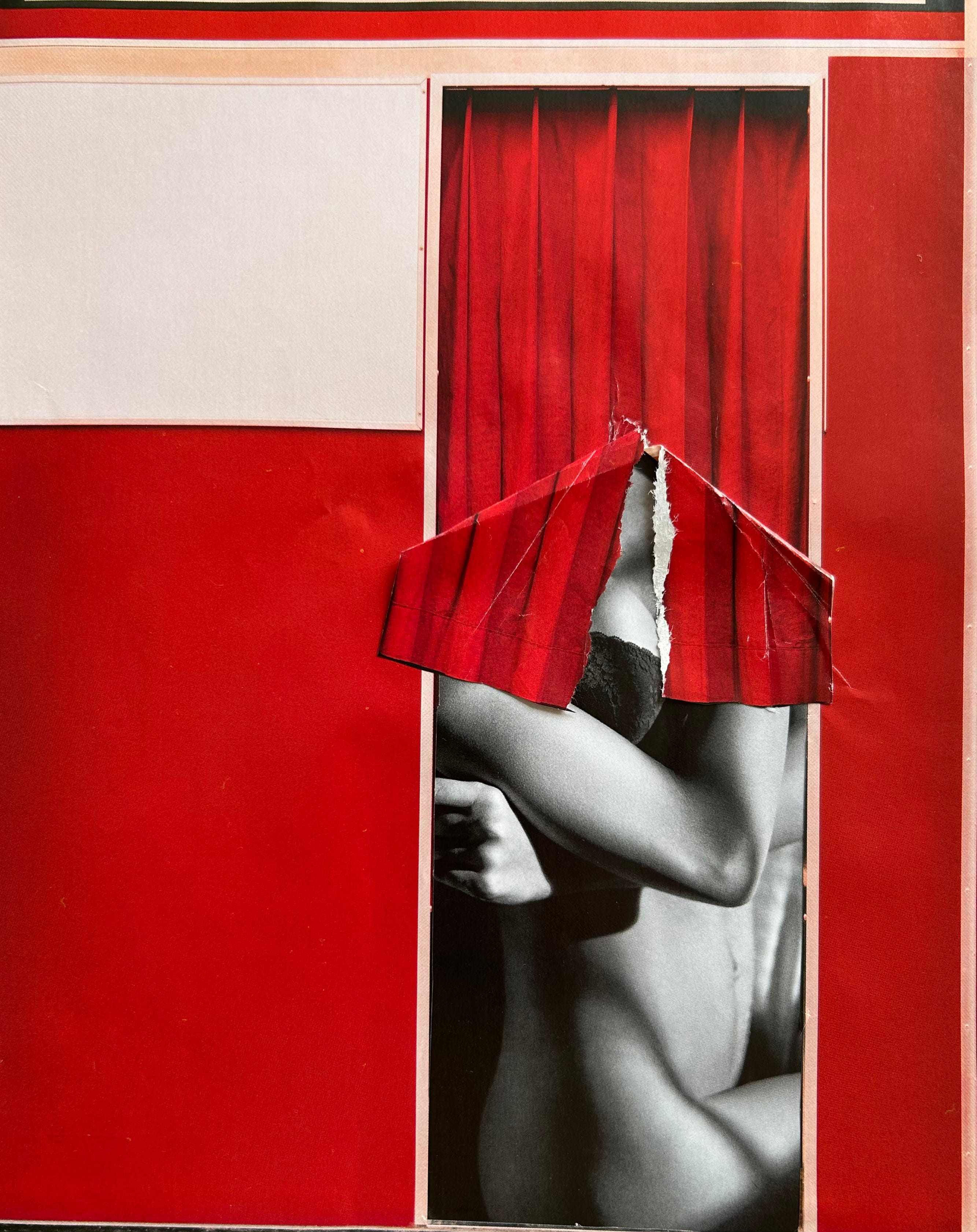
Increasingly, I want to squeeze. Things. Limbs, flesh. Have you heard of Cute Aggression? Me neither, but apparently I’m living it. The science of it went mainstream in 24/25 and signifies the neurological urge to squeeze, bite, and compress as emotional regulation. It’s violent aggression as a coping mechanism for intense positive emotions. I want to squeeze things, limbs, flesh, because I need a tactile connection. I want to fully consume the emotion, eat and digest it, take it in, with the hope that it transforms me. For too long the world has simply washed over me. Life coordinated, optimised, dissociated.
Demna presented his first collection for Gucci earlier this year and it was a high-octane, sleazy-chic revival of the brand’s provocative late-90s era. It showed skinny silhouettes, ultra-mini dresses, glossy croc-embossed leather and wet-look muscle tees. The show was a spectacle and the finale featured Kate Moss in the iconic G-string dress. The show was polarising. While some critics loved it, the looks were also described as chicken tightly wrapped in clingfilm, and “as exciting as large muscles with a limp dick”. Some fashion commentary felt that Demna had missed the target with a collection that didn’t capture the zeitgeist, but I’m wondering if it didn’t in fact nail it. The catwalk was a parade of smoothed out surfaces, screaming to be touched. It was the death rattle of perfected flesh. Retouched. Inflated. Impotent. Begging to be squeezed.
The rest of the industry has been catching up. Both spring/summer and fall/winter 2026 could be described as fashion remembering it has a body, with surface, structure, and sentiment as key elements. FW 26/27 is bright red, furry, feathery, shiny and embellished. Cinched waists, trains trailing from the hips, and high slits exposing your thighs. It’s been a directional shift toward texture as the new status, and surfaces that give back. Designers are making clothes you want to handle, to pull at, to feel give and yield.
To feel messy, sticky, sweaty
The dirt, the grit, the stained reality
The smoke in my lungs
The irreversible.
And I’m not alone with this feeling, that something tangible is missing. Feeling the bone-deep exhaustion of constant optimisation. Gen Z is increasingly engaging in DIY. They’re hand painting, working with clay, cutting & pasting, up-cycling, physically transforming garments. The thrift-and-remake culture is literally tearing apart and putting back together again. The analogue revival of vinyl records, film photography, and journaling are all formats defined by irreversibility, by stain, by grain, by all that cannot be undone. It’s real and permanent and defies retouching.
The AW 2026 runways have embraced deliberate messiness as a beauty and styling directive. After years of perfected content, the authentic messy trend became popular in 2025 as the anti-thesis to the hyper-curated. It’s not just about being undone, it’s a genuine desire for depth, humor and human flaws. We want friction, resistance, and clutter. Runway beauty has become defined by deliberate messiness (Prada sent models out in smudged racoon eyes and half-done ponytails) and even the actual runways were cluttered and messy, with immersive environments featuring giant mushrooms and actual moss. These were ultra-maximalist sets, in bold, mood-boosting colors. No more minimalist, quiet luxury.
Gen Z is literally wearing the messiness with smudged liner as a styling choice, distressed and raw-hemmed garments, and grunge-revival plaids. The look can be summed up as undeniably gritty. The over-40 consumer, while less messy, relates to irreversibility through more deliberate investments, buying fewer, higher-quality pieces. The statement coat, treated as an integral a part of you.
But the most irreversible of all isn’t a coat or a vinyl record. It’s a memory made in a room full of bodies. I recently went to see Suede in concert. The audience was mostly Gen X, but there was a surprising number of young faces, and why not? Brett Anderson at fifty-eight, dripping with sweat, coming off the stage mid-show to physically embrace the crowd. Gritty, sticky, irreversible. Pure ecstasy.
Fuck clean girl aesthetics, sheet masks, cleansing tea, detached minds
Fuck smooth, frictionless, inoffensive, digital
Desire pre-packaged, low-calorie, carefully lit.
The clean girl aesthetic is officially being declared dead across fashion and cultural commentary in 2026, and the aesthetic turning point may have been Charli XCX’s smudged Brat-era eyeliner. It seems people are increasingly asking themselves what, if anything, is alive inside them. Something real was being smoothed away, and the cost of that smoothing is paid in the currency of human experience. What do you actually think? What is your taste? Do you really want to look back one day and realise that your entire life was shaped by instagram aesthetics without any real memories?
The clean girl aesthetic was a curated museum exhibit about performance, devoid of personality and completely out of touch with the messiness of real life. All hydration and no real sweat. Its logical endpoint isn’t a sheet mask, it’s the non-answer. The read receipt with no reply, the dissolution of something real into digital silence. No mess, no confrontation, no irreversible words. Just nothing.
Gen Z arrived into fashion already inside the clean digital frictionlessness, and their current rejection of it is performed through deliberate chaos. Fuck smooth, frictionless, inoffensive, digital. This is their generation’s actual cultural argument happening right now. Chaotic beauty and messy girl trends have emerged as explicit rejections of the picture perfect that’s been shoved down their throats since their early teens. But how do you break free of shackles you were born into?
There’s an element of self-awareness and performance even in the rawness. They aspire to feral, ferocious authenticity, but they’re doing it through the very digital systems that made it impossible. They post about attachment styles and emotional accountability, honor vulnerability, and then ghost the read receipt. They celebrate contact and practise disappearance. Their rebellion is still curated, still well lit, still posted online. The oxymoron of #analogue.
Gen X grew up with the ‘90s grunge energy and compulsive irony. Before there were memes trivialising everything from tragic death to major world conflicts, there was Gen X quietly doing the same thing with flannel and a cigarette, just slower and with better soundtracks. We taught ourselves not to care, built a whole aesthetic out of not caring, and have spent the last thirty years trying to feel something again. We called it irony, and we’re still paying for it.
Give me loud, smoky, dirty, angry, ferocious, feral
Give me obsession, fire, passion, hate, love
Give me worship, radical attachment, misery, ecstasy.
Give me something I can hold.
Celine’s designer Michael Rider wrote in his FW26 show notes: “I love when messy, complex, layered inner lives come through underneath great clothes”. Amy Smilovic, founder of Tibi, said in a recent interview “People are wanting to feel something. What better way to feel something than to literally give them something to feel?”
And the demand is being answered differently depending on who’s asking. Gen Z doesn’t dress to look rich. In response to the fashion world’s constant price increase and focus on top tier clients, luxury becomes the obscure, the rare, the hard to find. The under-30s are more likely to thrift it, make it, or do without, and their mood-board is loud, ironic, nostalgic, and deeply rooted in online culture. They dress to express, to provoke, to advocate. The over-forties have the spending power to actually buy the expensive and irreversible, and while some still go for the designer it-piece, many channel their spending power to the search for vintage. Celebrities are increasingly toting ‘archival pieces’ on the red carpet, and the over-forties are hunting down exclusive pre-loved, the it-piece with a back story. It’s the asymmetric Gucci by Tom Ford leather skirt, or the delicate lace blouse by Alexander McQueen.
People are feeling hollow and the urge for touch is permeating contemporary culture way beyond the catwalks and red carpets. The Catholic church in both the US and Europe is reporting that baptisms are surging as young adults are looking for truth, purpose, and community. In western christianity, the Catholic faith is the most analogue, the Rosary being the most obvious example. You’re counting beads with your hands, and moving through prayers in a repetitive, embodied rhythm. It’s fundamentally a sensory, offline experience. Not to mention incense, holy water, genuflection, the sign of the cross, candles, saints’ relics… The faith is felt through the body and material objects, not just held mentally.
Tarot cards have also experienced a recent spike in interest among gen Z, and over 8 million videos were posted under #tarot on TikTok in 2024 alone. Tarot is deeply analogue: you’re holding and shuffling a deck, over and over. Gen Z is simultaneously gravitating toward the Rosary and tarot cards, for surprisingly overlapping reasons: embodied practice, self-reflection, beauty, and a sense of grounding in an overwhelming digital world.
Even more hands on: working with clay. The visual appeal of hands in clay and spinning wheels has made pottery a favourite among millennials and Gen Z. Pottery engages both the mind and hands, creating a meditative rhythm that many find therapeutic. Have you tried working with clay? Using your hands to mould clay is not only sensory, it’s a deeply sensual experience, even without Patrick Swayze spooning you.
And then there’s the cigarette. The gesture, the drag, the exhale; it’s old school, analogue, irreversible. Sales of rolling tobacco are up, and a generation that grew up being told smoking kills is lighting up anyway. Not despite knowing better, because of it. The cigarette isn’t a health choice, it’s a fuck you to optimisation. Most of my early kisses were laced with cigarette smoke and teenage adrenaline.
The rosary, the tarot card, the pottery wheel, the leather corset, the cigarettes. Catholic revival, mysticism, craft studios filling up with Gen Z on a Tuesday night, runways loud with fur and feathers and flesh, the smell of cigarettes in your hair. It’s a loud reclamation of appetite after years of being told to disappear into beige, white and minimal. The body and mind’s argument against clean, frictionless, and inoffensive. The thread connecting all of it isn’t religion or spirituality or a sudden interest in ceramics or layered feathers. It’s a generation aching for things to touch, for the dirty, and the real.
And I’m feeling it, desperately. I want messy, loud and rough. Fuck curated and nonchalant, give me chalant and raw, give me volition. I want passion and fury!
The body is demanding its due back from the screen.
Loved this!