

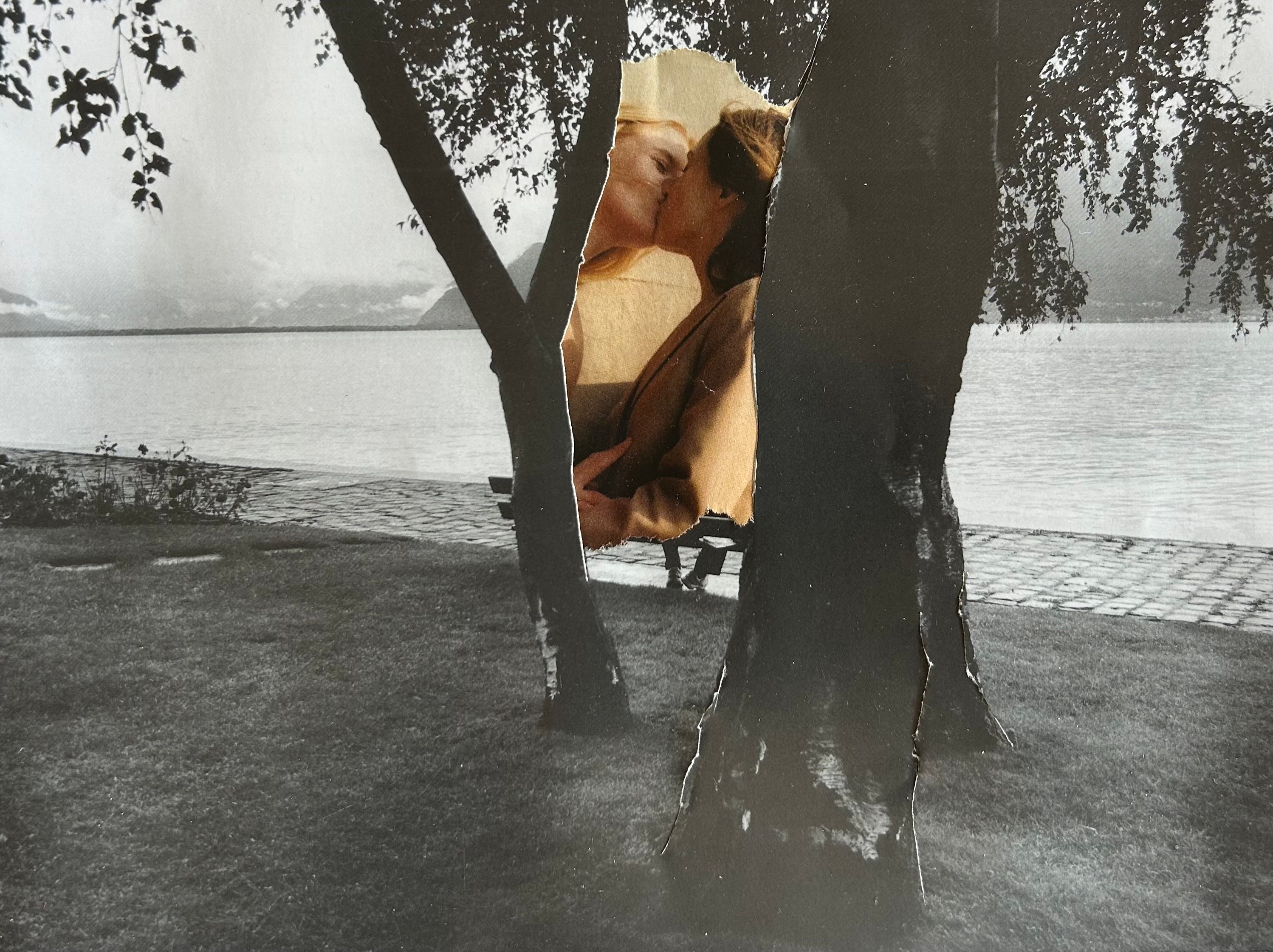
I remember one time I sat on a bench in the Stockholm summer night and talked to a boy for four hours straight.
We met at a party. We’d seen each other before, but the thought never crossed my mind to talk to him. Now here he was, leaving a party at the same time as I, so we walked together, and then we saw a bench and sat down. The conversation gushed unfiltered, like it can only do at 3 am when you’re 17 and the sun is already up. A firework of thoughts and feelings, not weighed down by experience or expectation. Every idea new, all dots connecting, editing each other in real time.
I fell in love with him on that bench because he fit the blueprint of what I wanted at the time: dreadlocks, dressed like a hippie, family firmly in the culture elite (driftwood dining room table, no two wineglasses matched, original art on the walls). But even though I came in pattern- matching, I didn’t arrive with a verdict. Like all teenagers, I went all in with whatever theory I’d just discovered and was now certain explained everything, then changed my mind mid-sentence, and came up with a new position by the end of a night talking to someone with cool hair. Intensely present, all poetry, potential and technicolor synergy.
Lately I’ve been noticing exchanges where there’s plenty of words, but absolutely no connection: the generative comment section.
I click on a headline because it’s covering a field where I already have an opinion, and by the time I get to the comment section I’ve conveniently concluded that it confirmed my views going in. It’s so comforting to realise I was right all along. I’m not alone, everyone is doing a version of the same move. ‘This really resonates’ met with ‘strong POV!’ From two people talking past each other. An abundance of words, simulating harmony. We’re pretending to seek connection, but in fact, we’re only broadcasting. We go in all gung-ho, pitch loaded, hoping to win, and mistake being agreed with for being met.
“A community in the thrall of the attention economy feels like an industrial farm where our jobs are to grow straight and tall, side by side, producing faithfully without touching.”1
I join these platforms because I want attention (there, I said it), but also because I long for communion. I hope to connect with others through opinions and original thought, but instead I walk away with the feeling that a great deal was said, but nothing has changed. My own mind included.
Nothing was built, nothing merged, no one was present. Nothing ignited.
When I first saw him in a crowded room I was immediately annoyed. In a split second I took him in and filed him away under ‘performative, annoying’. But he’d just passed through my line of vision, there was no need for me to react at all, no one asked my opinion. We met again in class shortly after, this time there was no way of avoiding him. My mind immediately conjured some sort of contempt, but what was screaming underneath was just ‘stay away’. I refused friendly smiles and chit-chat. All business here, I’m not charmed by you. But we kept meeting, and our bodies started something of their own, indifferent to what my mind had already decided. It was as if our mere physical proximity sparked something words could neither pin down nor defuse.
Trying to speak was pointless — no banter, no riffing, no teasing. I didn’t know what I dared say for fear of killing the current and even the most basic conversation crashed and burned. You’d think that not being asked anything about myself would be more of a turn-off, but the chemistry was off the walls, and the idea that our attraction defied conversation was titillating. We walked next to each other, skin crackling, throats seized.
Acutely aware, painfully present.
Without the classes there was no scaffolding to prop us up, and the words that would have provided some sort of foundation to build from never emerged. He left with his version of us, and I continued to nurse mine. I couldn’t control the narrative, and after being known only as the clever, reliable one, being completely overruled by pure physical want was transformative.
Jenny Odell, How to Do Nothing: Resisting the Attention Economy