

If validation is just a mirror, someone reflecting what I already know about myself, it can’t validate. If the experience is universal, the validation is diluted. It needs to be specific to me to count. We need external validation, but it has to be validation of our individual particularity, not by membership in a category. And the unspoken agreement about validation is that you can have it, but you can’t want it.
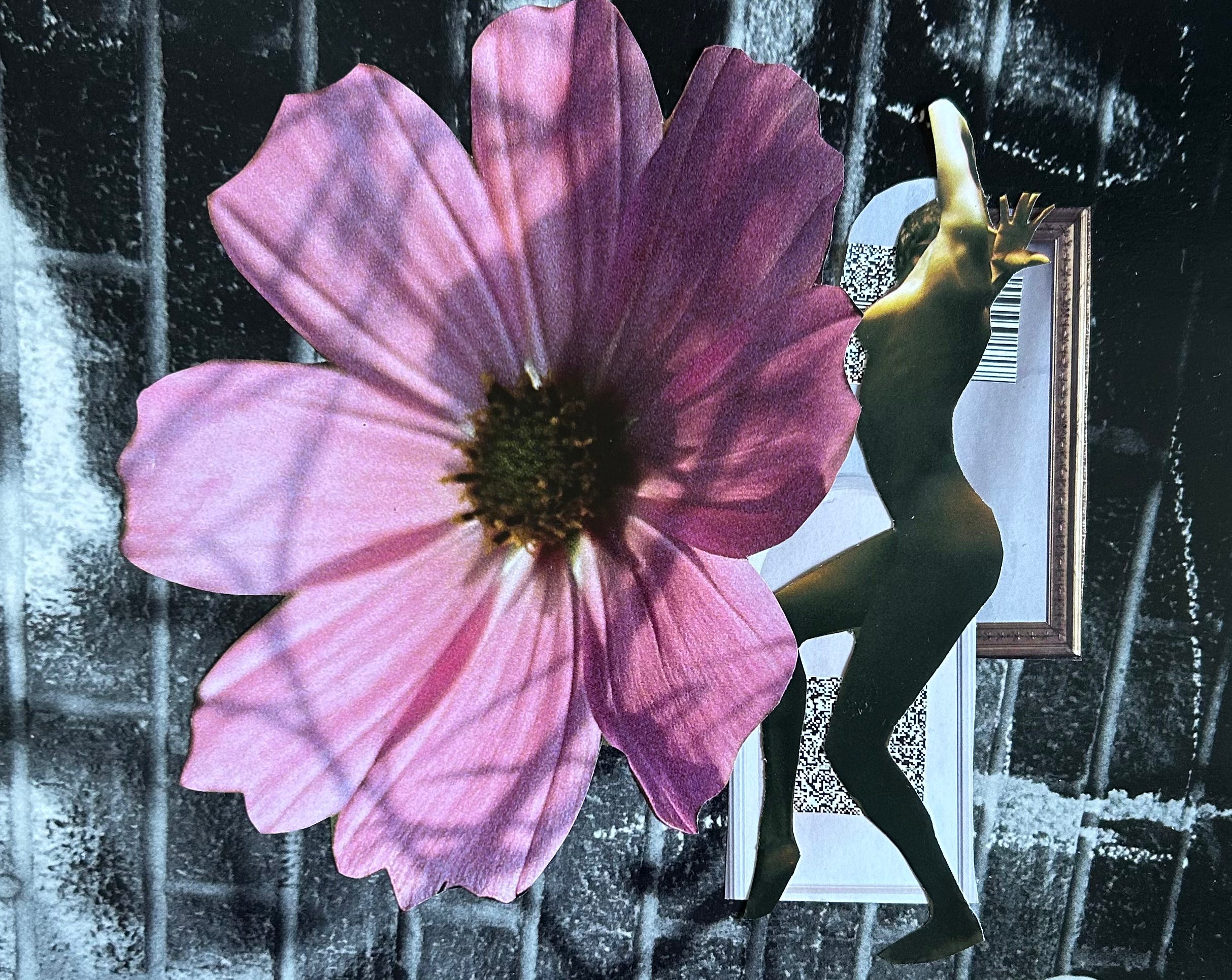
I came into the world loud, self-confident, assertive and hungry. For life, for food, for attention. As a child, a girl, in the 80s, this was not a good combination. I was not fine-limbed, I was not reserved, I was not accommodating. I was too much, of everything. And I absorbed a shame system so thoroughly that a specific quality (appetite, unselfconsciousness, taking up space) became the thing I tried to hide, always. A girl who took up space naturally got the message that she shouldn’t.
I think I was hooked by my first real infatuation at McDonalds, we were there with a group of people. We were both at uni, he had a girlfriend, I had something, a guy back home in Stockholm. I was hungry, I ordered the McBacon, thinking I should order the salad, it’s the feminine thing to do. And he noticed. He liked it. He named it as a reason he was drawn to me. The validation was real and it was particular and it hit the exact coordinate that had been under pressure the longest. He was attracted to the very core of my personality: the excessive, the assertive. It wasn’t a quick fling, it simmered for months before anything happened. When it finally did, it was kind of magic. The first kiss was an extension of the slow burn, the build up from “it’s gonna happen” to actual physical contact felt like exquisite eternity. And then we didn’t last. Not because he was wrong about what he saw. He saw me, and it wasn’t enough. The seeing wasn’t enough to make it official, to make it land, to close the gap. To make him want to stay.
To be seen, and then left anyway, is worse than never being seen at all. Was it something I did, something I revealed, something I failed to manage correctly? The editing begins. He was my spy, but his seeing was also a projection, a curation of his own self-image. I was a mystery to solve. It’s addictive to be the object of intense attention, and the thing I thought he saw starts getting managed. Out of fear to disappoint - that I’m not that special, funny, complex, charismatic, adventurous - I quietly destroy the thing that was. Desire makes you curate yourself, and it makes us curate each other. But the edited self-presentation is fragile precisely because it’s willed.
Which brings us to the body. There’s been a lot of outrage lately over the return of ultra skinny, and rightly so. I can hear the collective cry from the barricades: Fuck the patriarchy! Trying to keep women down by diverting their attention and keeping them small. The patriarchy is real, but it’s using a mechanism that was already there. The brain distinguishes between wanting and feeling pleasure, and the drive to want is stronger. And the grass is always greener somewhere else. There was progress made with body inclusivity, but fashion cycles falsify the narrative. Individually every body can feel pleasure, but collectively it’s reserved for the few. When enough people have access the standard moves. It always does. Body ideals returned to 90s ultra-skinny despite media literacy and niche identity, because the thin body was hard to get. When it becomes accessible to enough women through GLP-1s, the standard will shift to whatever new shape the majority can’t afford, or achieve. The body is a moving class marker, not a fixed moral judgment.
Social media follows the same pattern. Too many people were too pretty on the platforms. It ceased being interesting, or rather, desirable, because it had become suspiciously attainable. Instead of performative glam, ‘grounded and real’ has become the new hard-to-get. Various trend forecasters are presenting us with data showing the increase of this new ‘authenticity’. But if the authenticity was actually authentic, you wouldn’t be able to track it. The moment it’s measurable it’s already become performance, and messy is easier to perform than perfect.
AI has not-so-quietly become the new gluttony. Sprezzatura. Talent, or sexiness, is for others to name and use, not yours to claim. Visible appetite is the violation. The moment you want the wanting, you’ve overstepped. AI protesters are protecting the idea of the ingénue, the performance of effortlessness. The moment she’s seen needing tools the illusion collapses. Insisting that the writing process be completely clean aligns it with the vintage label, it creates provenance without the supply chain. Because of AI, more people can now produce results that were previously reserved for the few, but when everyone can do it, the value of the output is diluted.
Scarcity drives desire, which is why all the fashion houses are currently parading their archives. They’re pulling from them. Or creating ones they didn’t have. The archives prove provenance, they romanticise and idolise. You’re not only buying in to a look, you are curating your identity with a piece of fashion history. Proper vintage means obscurity, and the work required to find the thing is the gap, the status signal. Anyone can walk in to H&M and buy a top from the new Stella McCartney collaboration. Not everyone can get their hands on one from the H&MxStella from 2005.
There’s an initiative coming very soon called the Digital Product Passport, DPP. Framed as a sustainability effort, it’s meant to force manufacturers to produce less waste, and the data can be used to certify resale and reduce counterfeits. Thus the QR code, which was supposed to democratise supply chain information, instead becomes the velvet rope when the passport that proves authenticity also proves you’re not in. Visionaries imagine a world where you can connect to other owners of your obscure Japanese denim, or keep track of the popularity of your Prada coat to know when it’s a good time to sell it. This proposes to eliminate the gap entirely, which is why it will fail to deliver the belonging it promises. DPP-as-membership makes the club legible, and legibility is the enemy of desire. Once the list is visible, once you can scan who else has the bag, or the denim, the exclusion stops being mysterious and becomes administrative. The gap is still real but the feeling of scarcity changes. It becomes generic belonging, and that doesn’t count.
Brands have opened their romantic archives to let us look at their ideas and soak up the atmosphere. A cynic might say this is very well timed, opening to admiration, right before the archive with the factory names is forced open. The Tier 3 suppliers. You’re about to be shown that whether you want to or not. And we don’t. We want provenance without supply chain. Our body is ultra thin and there is no blueprint on how we got it. Our vintage coat is exclusive precisely because there is no official record of heritage. This is what desire quietly demands. The ‘Je ne sais quoi’, the illegible quality that makes someone irresistible.
Everything I reach for is an attempt to get to the other side. I don’t. The woman buying the vintage Gucci leather skirt and the girl hiding her appetite are running identical software. The skirt can’t fill it. The body won’t fill it. It felt like the particular recognition at McDonald’s filled it, until it was revoked. The gap is permanent. The content just rotates.